Understand the business
We map the people, systems, records, documents, and decisions that matter.
Useful, predictable AI intelligence
We help map how your company works, connect the systems and data behind it, then use Mission Control to keep the work, decisions, and AI tools in one safe place.
We have deployed Mission Control with client teams, and we are using the same base to build Scout, our own agentic sales intelligence tool.
Where this fits
Your processes may be messy. Your data may be scattered. Your team may be under pressure to adopt AI, but installing agents by itself does not create a working business system.
The easier path
We start with one useful part of your company, map how it works, connect the right information, and build a Mission Control surface your team can actually use.
We map the people, systems, records, documents, and decisions that matter.
We turn the work into clear screens, steps, status, review points, and logs.
We add AI where it can research, summarize, compare, recommend, or prepare work for review.
What gets built
Mission Control is adapted to your business. It gives your team a shared place to run work, use AI, review recommendations, and see what happened.
First build outputs
Your team should leave with something usable: a mapped process, connected information, useful AI jobs, review screens, and a clear record of what happened.
The people, systems, data, documents, and process steps that matter.
A focused place for records, recommendations, evidence, status, and next steps.
Clear tasks for AI, tied to your business context instead of loose prompts.
Runs, decisions, issues, outcomes, and feedback captured where the work happened.
How it becomes real
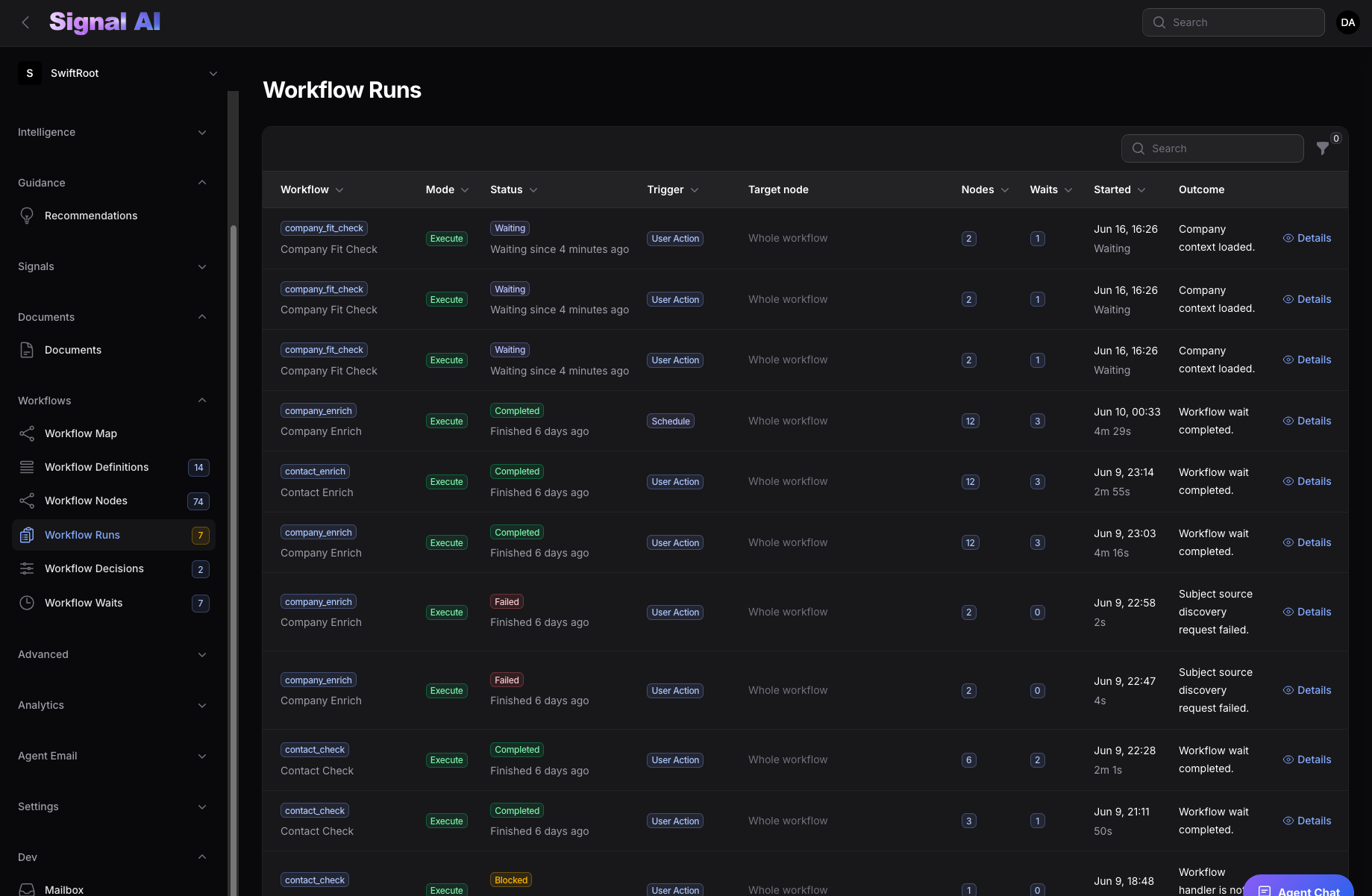
Mission Control gives the team two things at once: a map of how the work should move, and a live history of what actually happened.
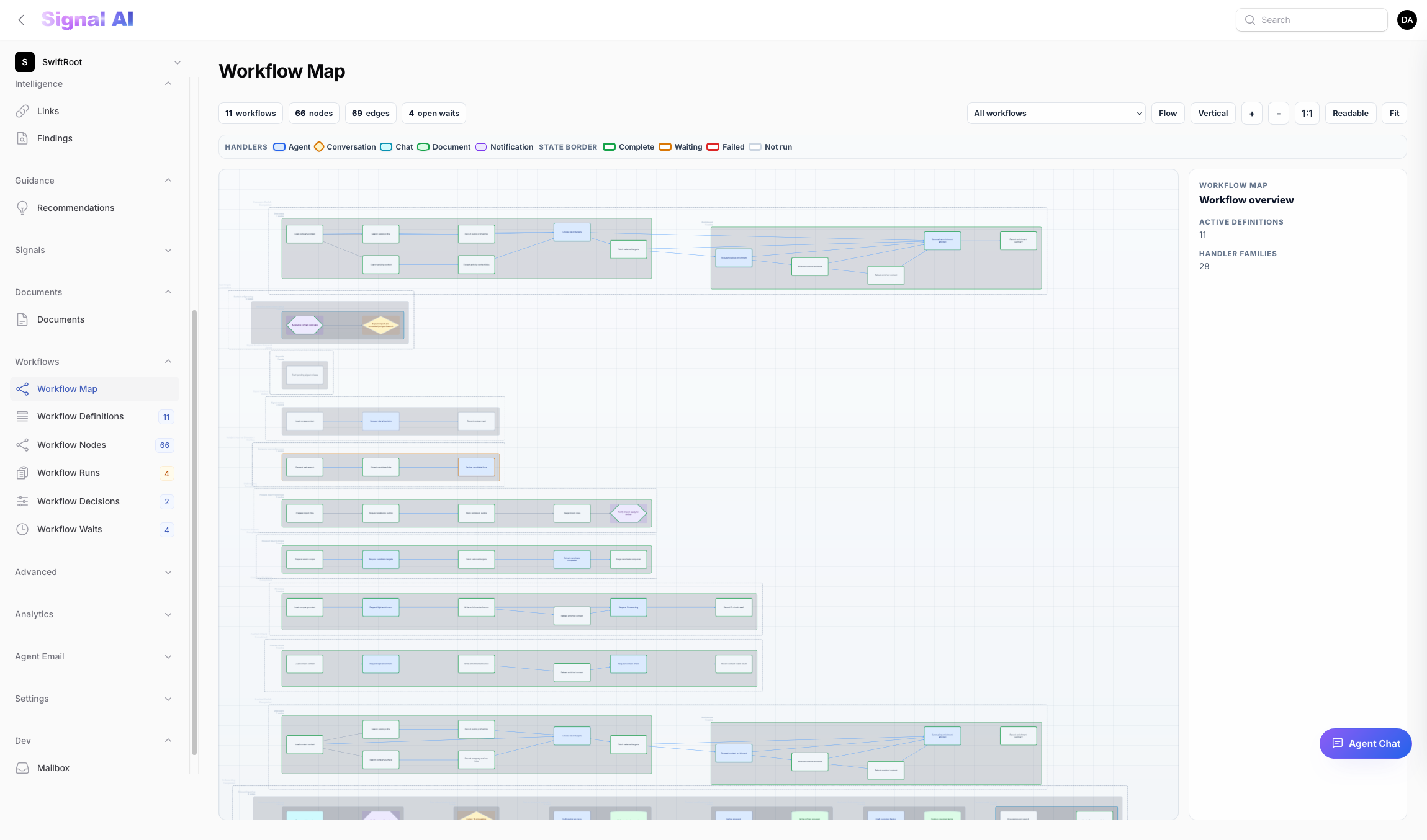
The team can see the steps, handoffs, waits, and AI jobs that make up the work.
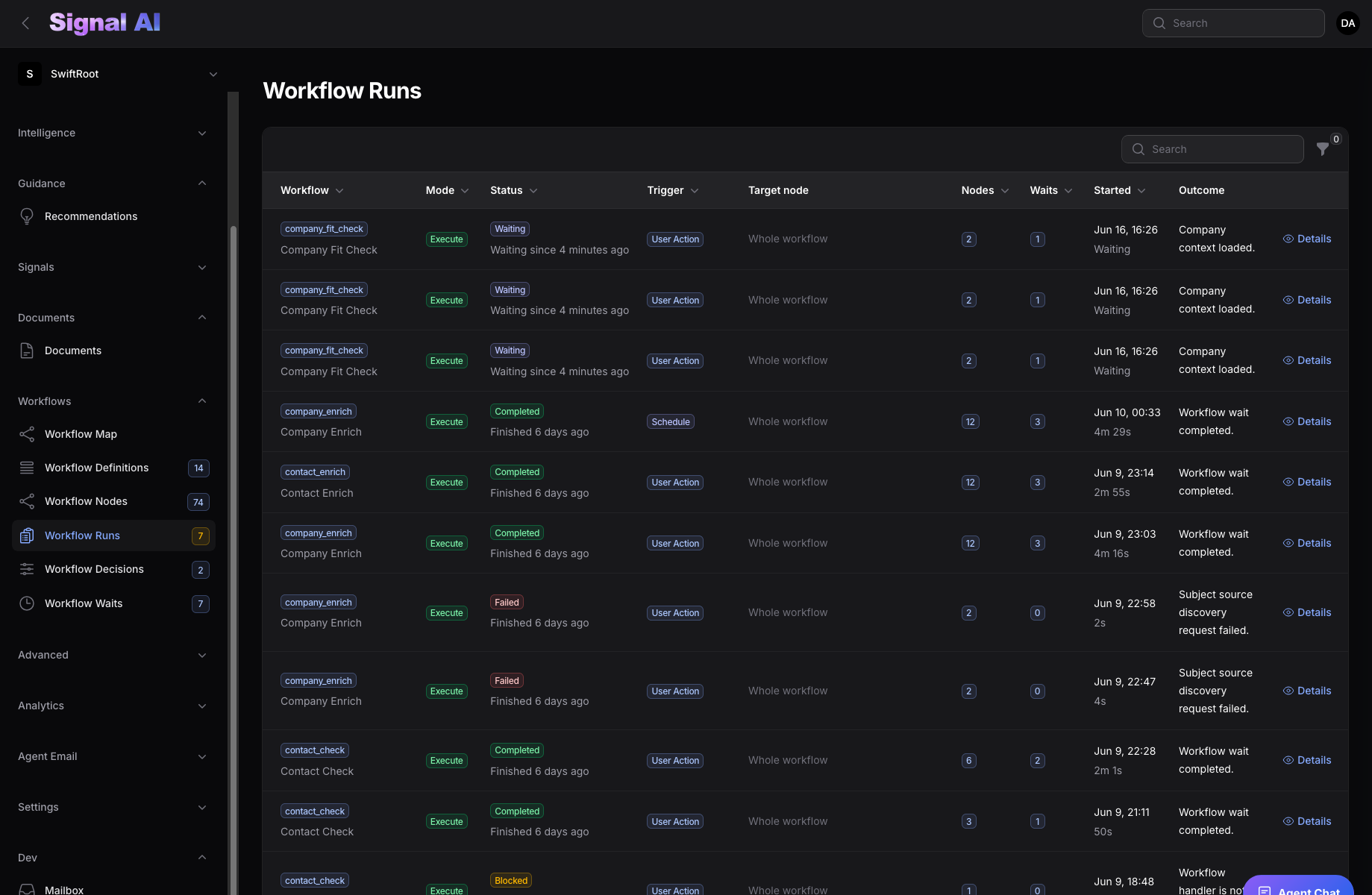
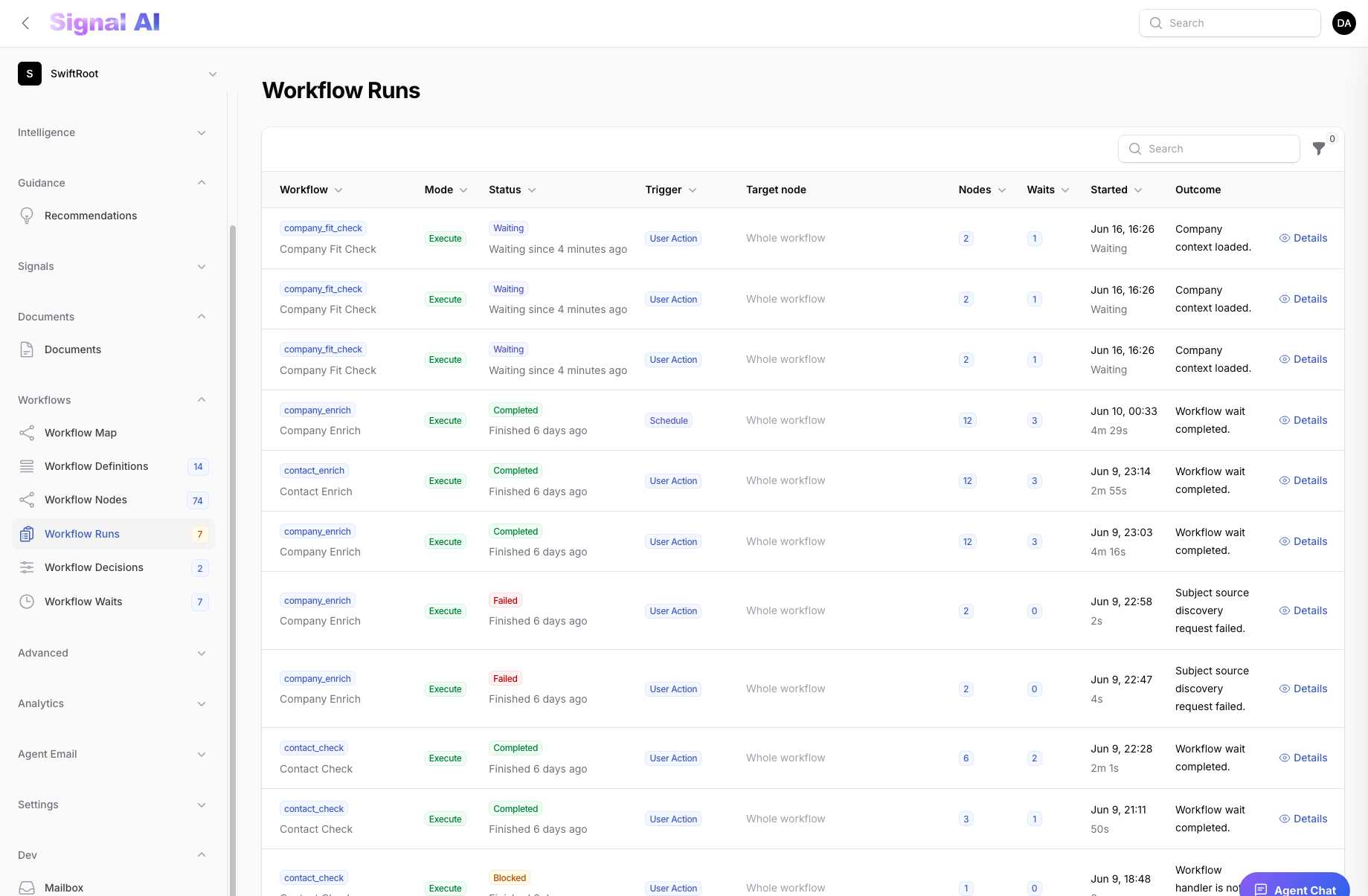
Runs, waits, triggers, failures, and outcomes stay visible so AI work can be monitored and trusted.
What makes it different
AI is useful only when people can see what it used, what it found, why it matters, and what should happen next.
Built on the same base
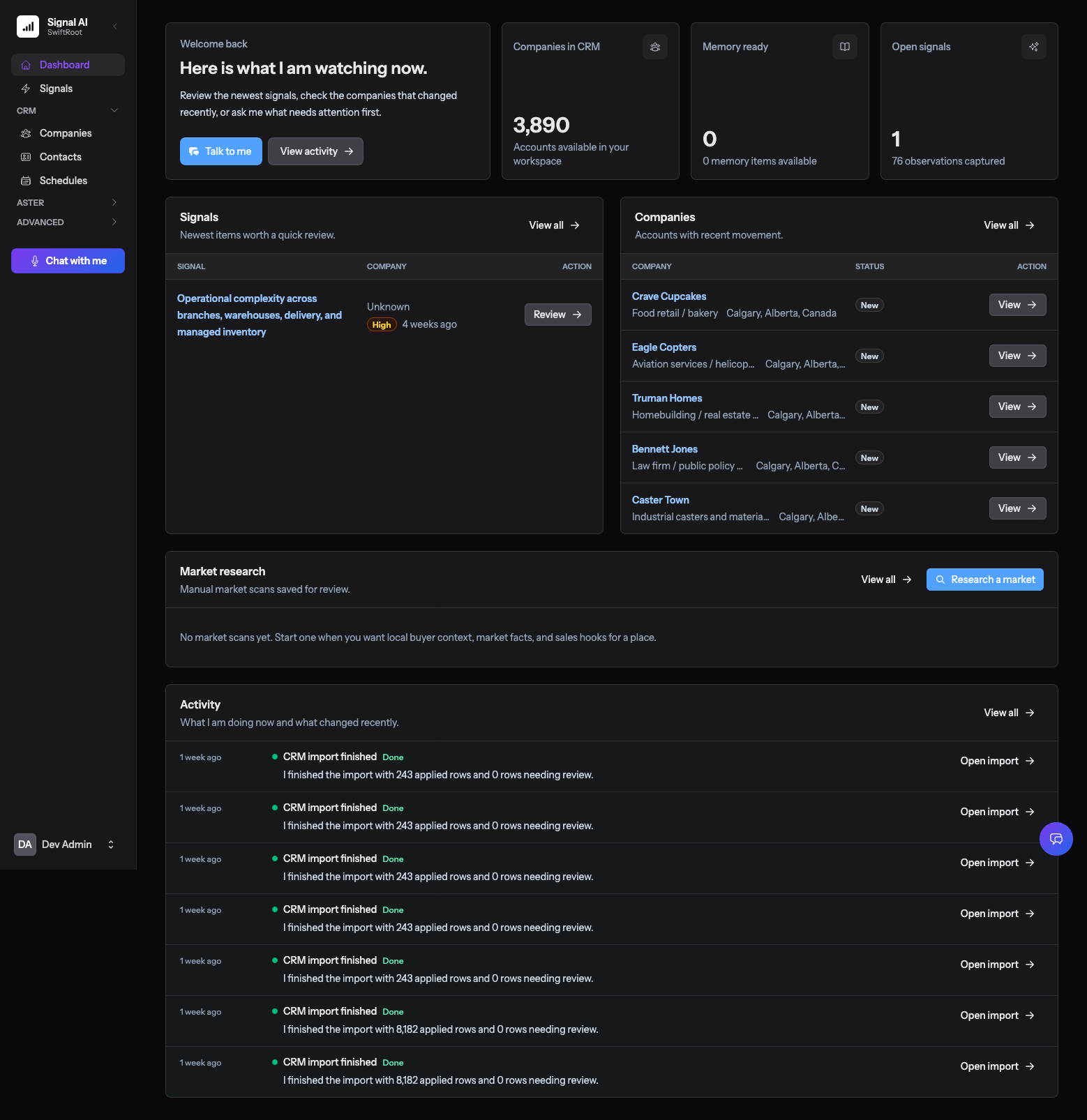
Scout is our agentic sales intelligence product. It uses Mission Control to connect company data, market research, signals, recommendations, review, and follow-through in one place.
Who this is for
Mission Control is a fit when your team has real work to improve, not just a curiosity about AI.
Your team depends on records, notes, documents, websites, and memory to make decisions.
You want useful AI support, but you need clear instructions, review, source trails, and controls.
You want to see what ran, what changed, what needs attention, and what happened next.
Get started today
Start with the part of your business where better visibility, safer AI, and clearer decisions would make the biggest difference.