
Timeline
24 mo
Designed, extended, and refined around evolving operational needs over two years.
E-commerce platform case study
 Cookies By George built a national ordering system around real operational complexity
We designed a custom commerce platform that handles gift-worthy product bundling, multi-carrier shipping, subscriptions, location rules, and the day-to-day admin that breaks generic storefronts.
The result is a system that supports national delivery without forcing the team back into spreadsheets, manual workarounds, or disconnected tools.
Timeline
24 mo
Designed, extended, and refined around evolving operational needs over two years.
Scale
400K+
Cookies delivered annually through a system the team can operate confidently.
Connected
8+
Payments, shipping, loyalty, courier, and monitoring services working together.
Outcome
Custom fit
The system absorbed bundling, shipping, loyalty, subscription, and admin edge cases that generic commerce setups could not handle cleanly.

The operational problem
Commerce was not the hard part. Operations were.
Bundling, blackout dates, courier rules, subscriptions, loyalty, and multiple locations all had to behave like one system instead of a pile of plugins.
What we built around
Ordering, shipping, admin, and exceptions had to stay in sync.
That meant designing around the real workflow, not just the public storefront.
What changed
The team got a working operating system, not another fragile layer.
Orders move cleanly, data stays connected, and staff spend less time patching around missing logic.
What had to get solved
The business needed custom logic at nearly every step: product combinations, delivery timing, payment chains, location-aware rules, subscriptions, loyalty, and admin visibility.
01
Promotions, combinations, and custom configurations needed rules that off-the-shelf commerce tools could not express cleanly.
02
FedEx, ShipEngine, and local courier workflows all needed accurate rates, delivery scheduling, and region-aware behavior.
03
Recurring billing, gift flows, loyalty processing, and multiple transaction types had to work without manual reconciliation.
04
Inventory, blackout dates, order states, and exception handling all needed to be visible to the team in one place.
What we built
Instead of patching around platform limits, we built the workflows directly into the system so the storefront, admin tools, and integrations all behave like one product.
Payments
Stripe and DataCandy integrations for purchases, gift flows, and recurring charges.
Shipping
Carrier selection, delivery dates, courier support, and operational guardrails.
Subscriptions
Repeat orders, automation, and payment continuity without manual chasing.
Admin
A working dashboard for operations, visibility, and exception handling across locations.
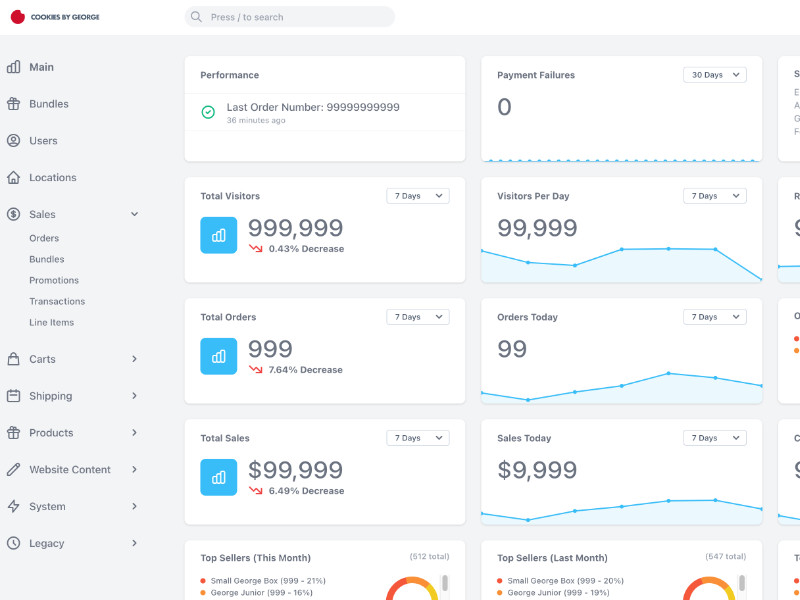
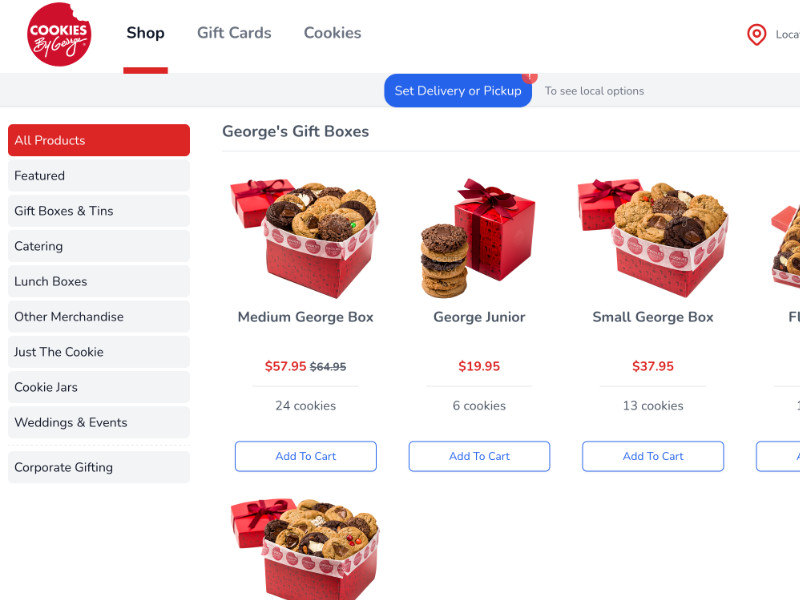
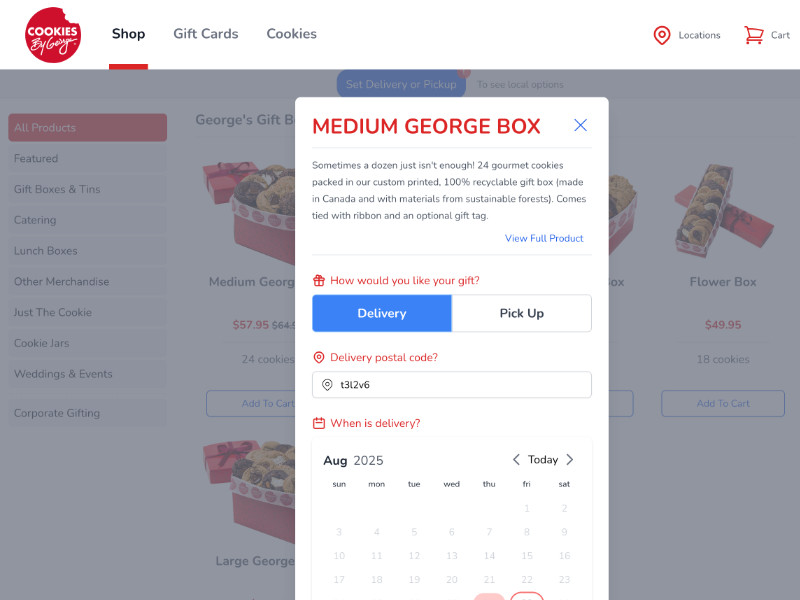
Results and impact
The win was not just a nicer storefront. The real win was operational clarity: less manual admin, cleaner data flow, and a system that could support demand without collapsing into exceptions.
Impact 01
Order processing, shipping coordination, and inventory logic now run through one connected workflow.
Impact 02
Payments, loyalty, carriers, courier workflows, and monitoring all support the same operating picture.
Impact 03
National delivery, repeat orders, and promotional flows can grow without multiplying admin burden.
Impact 04
Customers can order confidently and the team can see problems faster instead of discovering them after the fact.
Client feedback
“Great service, excellent at problem solving, a joy to work with. Alek has a wonderful personality and is really great at bouncing ideas off of each other to result in the best product possible.”
Operations Manager, Cookies By George
Systems in play
Stripe Payments, FedEx Shipping, ShipEngine, MCDispatch Courier, AMA/CAA integrations, DataCandy processing, and real-time monitoring.
What made it work
We built around the real operational constraints instead of hiding them behind a prettier checkout.
Takeaway
When the workflow is designed properly, the storefront, admin, and fulfillment side all get easier at the same time.
Similar AI readiness gap?
The right first fix usually starts with understanding the workflow under the friction. That is how better systems get built.